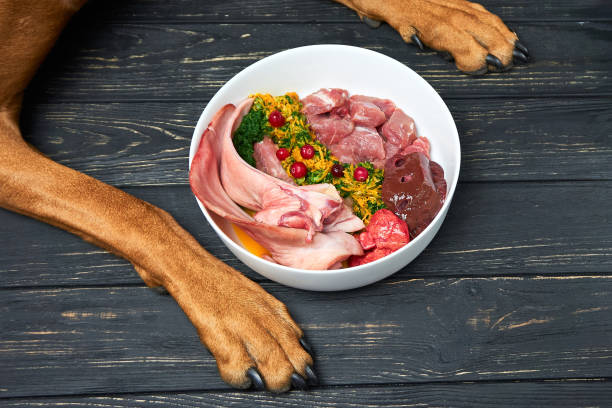
I’m a huge advocate of species appropriate diets, which for dogs and cats means a raw diet incorporating meat, vegetables and bones.
A dog or cat in the wild will eat what’s best for it: it will attack prey and will eat most of the animal, including its stomach contents (usually vegetables/ vegetation), internal organs, and bones. It will eat vegetation when prey is scarce. It won’t eat the same thing every day, and the balance of nutrients will work itself out over time, not over every day. This is how they are designed to eat. Their digestive systems and requirements haven’t changed since commercial processed foods were introduced.
Some people are understandably concerned about whether dogs and cats can handle raw food, particularly meat. It’s important to remember that in many ways dogs’ and cats’ digestive systems are stronger than ours: their gastrointestinal acidity is around 1-2 (extremely acidic) while a human’s is around 7 (neutral). Dogs and cats can – and need to – digest raw food. They are well built to deal with decaying food, pathogens, and bacteria if their gut health is strong, which usually means being fed a raw diet.
My dogs eat a raw natural diet, including meat, vegetables, and bones. Their skin and coats are shiny and soft, they don’t have doggy breath, they don’t need to have their teeth cleaned under anesthetic, their mobility and energy levels are good, their faeces are firm and compact and don’t smell badly. Overall, their health and immunity are strong.
Transitioning to a raw diet
It is best to take time to transition from a cooked (dry or canned food) diet to a raw diet. Changing too quickly will almost certainly result in vomiting and/ or diarrhea. I recommend transitioning over the space of about ten days.
Dry food
If you’re incorporating a little or a lot of dry food into your dog or cat’s diet, please choose one that does is grain free and does not contain meat meal (you need to check the detail in the ingredient list to check for meat meal). Meat meal is often touted as a great, bioavailable, cheap source of protein for dogs and cats. It’s actually meat and other animal parts cooked at such a high temperature that it turns to dust. Literally. Please avoid it.
Can dogs and cats be vegetarian or vegan?
The short answer is no.
Cats are obligate carnivores, which means they need animal products to obtain all the nutrients they need to survive. Dogs are facultative carnivores, which means they can survive – but not thrive – without meat. The diet to help them thrive needs to include animal products. A species-appropriate diet includes animal products for both dogs and cats.
Please contact me if you’d like to talk more about a good diet for your dog or cat.
 Holistic Small Animal Health